
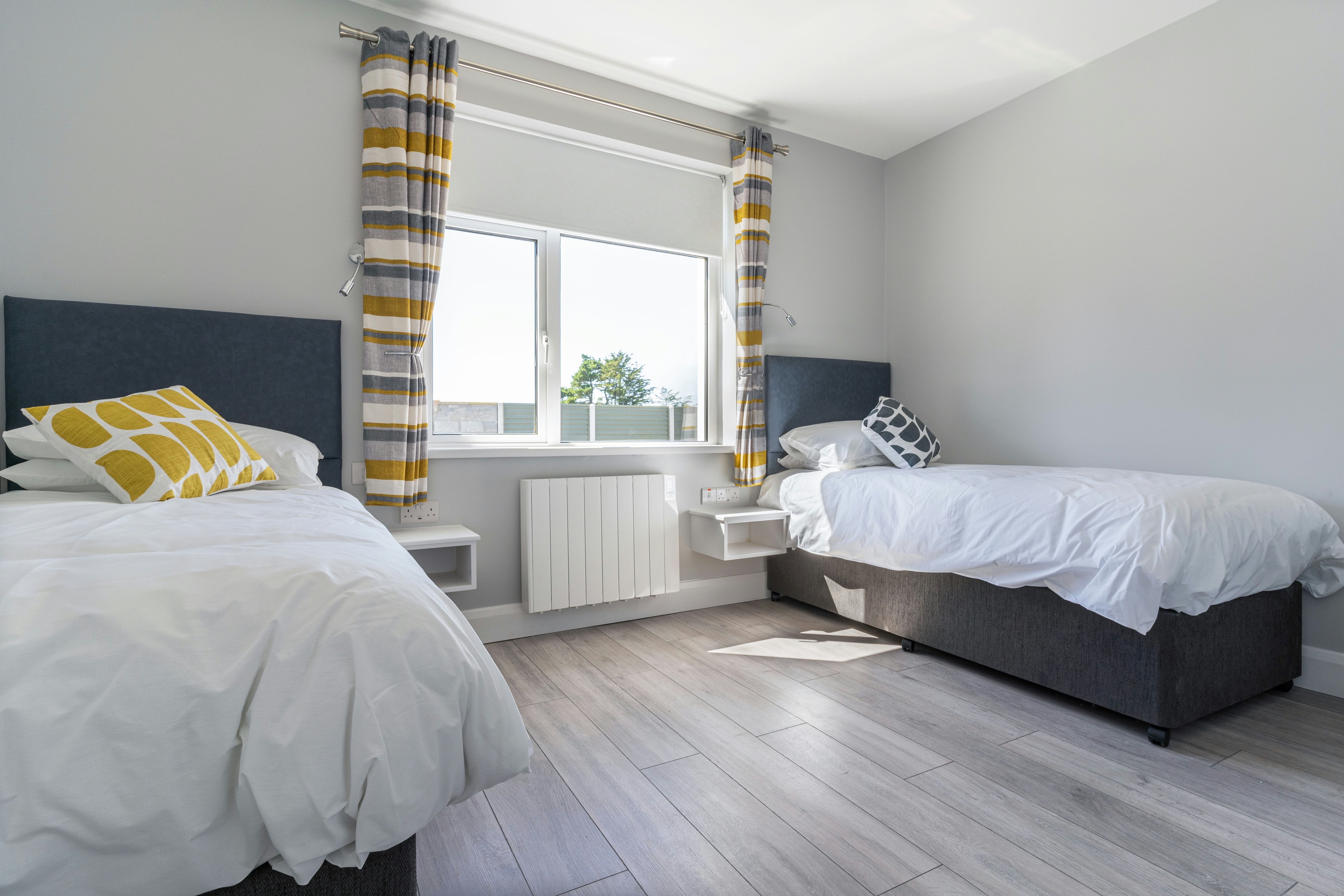
Most guests are scrolling through a search page on their phone, comparing a dozen places at once. They're not reading your description first; they are looking at the cover photo, and deciding in about a second whether your listing is worth a second look. Everything else, including the amenities list, reviews, and nightly rate, only gets read once the photos have already done their job and earned the click. Get that first image right and everything else about the listing gets easier.
I've shot enough listings around Waterford now to see the pattern repeat itself: two similar properties, similar price, similar reviews, and the one with better photography books out first and often commands a slightly higher rate for doing it. It's not about tricking anyone; it is about giving guests enough confidence in what they're looking at that they stop scrolling and start reading.
The cover photo carries the listing
It needs to be the room a guest will actually fall for, usually the living space or the best view, shot wide, level, and in flattering light. I always come back from a shoot with a handful of strong candidates for this one spot, because it's worth the extra time on site to get right. A crooked horizon, a cluttered corner just in frame, or a dull grey sky through the window can quietly undercut an otherwise good photo, so this is the one shot on a shoot I won't rush.
It's also worth testing more than one option once you've got them. Airbnb's own data has shown hosts that a different cover photo can shift click-through meaningfully, and it costs nothing to swap it and watch what happens over a couple of weeks.
Show the place honestly
Wide-angle shots that make a room look bigger than it is might get the click, but they cost you on arrival; mismatched expectations are one of the most common reasons for a bad review. I shoot to make a space look its best while still being an honest read of the room, so what guests see is what they get. That usually means resisting the temptation to go as wide as the lens allows and instead choosing an angle that still reads true once someone's standing in the doorway with their bags.
Natural light does most of the heavy lifting
Co. Waterford has no shortage of good natural light once you know when to use it. I often time a shoot around a west-facing room to catch late afternoon sun, or work around a north light kitchen that stays soft and even most of the day. Bright, naturally lit rooms consistently outperform ones shot with the overhead lights on, which tend to cast a flat yellow tone that photographs as tired rather than cosy.
Weather matters too, more than people expect. An overcast morning is often better for interiors than bright sun, since harsh light through a window can blow out the view and leave the rest of the room in shadow. For exteriors and any shot that includes a garden, sea, or mountain view, I'll usually push for a clear or partly clear sky, even if that means working around the forecast rather than a fixed date.
Local detail sells the stay, not just the space
A coastal let near the Copper Coast or a countryside cabin isn't just competing on the room; it is competing on the setting. A few well-chosen shots of the view, the garden, or the walk down to the water give guests a reason to book yours over a similar place a few doors down. I'll usually build a short walk into the shoot brief just to capture that context: the path to the beach, the view from the front step, or the landscape from the garden gate.
These aren't filler images. For a lot of Waterford hosts, the setting is the actual product being sold, and the interior shots are just proof the place is comfortable enough to enjoy it from.
A full shoot covers more than the obvious rooms
Guests look past the living room and the bed quickly, so a proper set of listing photos needs a bit more range: the kitchen with worktop space visible, the bathroom looking properly clean and well lit, any outdoor seating, parking if it's not obvious, and a wide shot of the exterior that helps guests recognise the place when they arrive. Missing one of these is a common reason a listing gets more questions in the inbox than it needs to.
Editing should be light, not heavy-handed
A bit of editing goes a long way: straightening verticals, balancing exposure between a bright window and a darker room, and correcting colour so white walls actually look white rather than orange under a warm bulb. What I try to avoid is anything that reads as obviously processed: oversaturated colours, unnaturally blown-out skies, or a room that looks noticeably different in person than it does on screen. The goal is always a photo that looks like a great version of the real room, not a different room entirely.
If you're a Waterford host
If you're setting up a new listing or your current photos are a few years old, it's usually worth a fresh shoot; bookings and nightly rates both tend to lift once the listing actually reflects the place. It's a couple of hours on site, timed around the light, and you walk away with a full set of images built specifically for how guests actually browse. Get in touch and I'll talk you through what a shoot looks like for your property.